
It's Taft's Nightmare
We're All Just Living In It

The other day, I heard an interesting horror film premise. It revolves around a painting. Most people who look at the painting see something banal. But a small sliver of the population that gazes on the painting sees something horrifying. Because the horror is Lovecraftian, the majority can never quite figure out what the rest of the audience is seeing in the painting. This premise reminded me of how lawyers and legal scholars approach Myers v. United States.
The first time I read Myers almost a decade ago, I thought it was one of the strangest things I had ever read. I mean, this thing reads like satire on itself. It wasn’t like any other opinion I read in law school, so it stuck with me. I didn’t realize it at the time, but I was joining a cast of oddball misfits who saw something tortured in the painting. I was joining a motley crew of legal figures: Edward Corwin, Robert Post, Justice Harlan Stone, and Adrian Vermeule. Collectively, we are an odd bunch who don’t agree on much. But we all have seen something flowing from Chief Justice William Howard Taft’s tortured psyche. Post described Taft’s opinion as “schizophrenic.” Vermeule has written about an apparition-like “maximalist” unitary executive lurking below the surface of Myers. Whatever words we’ve used to describe the monstrosity in the painting, we have all encountered a gaslighting function in the American legal academy. When Vermeule wrote about the maximalist UET in Myers, he was criticized by the center. When I’ve raised similar points, I have received milder (totally fine) pushback from a certain kind of admin law scholar.
This all has new relevance. In the oral arguments in Slaughter, Justice Kagan’s role was to essentially raise the specter of the maximalist UET. She repeatedly intoned, as though she had finally seen the monster in the painting, that there was something in the unitary executive that could not be controlled. This accusation hovered over the Court at oral arguments; even the conservatives (Alito aside) seemed a little spooked. And Kagan’s invocation of the maximalist UET has found new avatars in the mainstream, like Stephen Vladeck.
The maximalist UET is increasingly difficult to dismiss. As the painting draws closer, we’re all starting to see its outlines.
The Tortured Psyche of William Howard Taft
Chief Justice William Howard Taft is a unique figure in the long stretch of American history. It’s not just the oft-cited fact that he is the only person to serve as both president and chief justice. Taft embodied irreconcilable instincts that clashed in his era. This has led to a growing literature I think of as Taft’s Body. Taft’s Body has become a sight of what Reva Siegel would call “constitutional memory.” Constitutional memory is the label legal academics have put on the inter-disciplinary trend towards collective memory. Collective memory reflects the fact that we make sense of ourselves through the stories we tell about the past. This is nowhere truer than in law. As Balkin notes, lawyers can’t help themselves. We generate authority by telling well-crafted stories about our shared past. That’s just what we do, how we understand the world around us.
Taft’s body demonstrates that the lives and tribulations of legal figures—in a sense, biography—is an important part of our constitutional memory. And Taft provides an inexhaustible supply of conflicting stories. For conservatives, Taft is a hidden precedent for a kind of conservative legalism. The Roberts Court sees itself as vindicating Taft’s misunderstood brilliance, his proto originalism. You see this at the Slaughter oral arguments, where Kavanaugh expressed open admiration for Taft as a unitarian jurist. The lefty legal liberal counter-narrative tries to deploy the conservatives’ regard for Taft as a weapon. Andrea Katz and Noah Rosenblum reposition Taft and his Myers opinion. According to this duo, Taft was merely trying to vindicate a progressive presidency. Taft’s presidency would be robust but bound by the rule of law. Katz and Rosenblum take the conservatives’ regard for Taft and wield it like a weapon, intoning that the Roberts Court has misunderstood and misapplied the teachings of their saintly ancestor. Separately, a more radical critique of Taft has positioned him as a champion of the Dunnings School on Reconstruction. On this view, Taft was dueling in Myers with his own cynicism for the Reconstruction project.
All these different approaches to Taft capture aspects of the truth, but they miss something important. Taft did not have a coherent mind. When Taft returned from his wilderness years to the Supreme Court bench, he had been out of professional legal practice for many decades. Even in his prime, Taft was prone to thinking through the inchoate instincts that drove him like a puppeteer. Taft was always a legalist. “I love judges and I love courts” is his most honest statement of self-reflection. But there was always a reactionary lurking under the surface. This is something that is underplayed in the critical approach to Taft. Writing to his genteel wife in the 1890s, Taft would imagine firing on unarmed labor protestors. The guy had violent contempt for social upheaval of any kind. The Progressive Era’s experiments and the Russian Revolution only exacerbated this inherent quality in the leadup to Taft’s tenure on the Supreme Court.
Those events led Taft to sour on legislatures, which he regarded as the dangerous sources of societal experimentation. Increasingly, Taft craved a tribune-like presidency that could lead the country and curb Congress’s worst excesses. This is where I think Katz and Rosenblum overstate. Their vision of Taft as a templar for a law-bounded presidency captures a lot of truth. Taft could never consciously break with the rule of law and openly despised his erstwhile mentor Teddy Roosevelt’s conception of the presidency. But this does not make for a progressive presidency. There’s the obvious—by the 1920s, Taft openly despised the Progressive Era as a time when the country cracked up. (His wilderness years writings show a kind of mental connection he formed between the Progressives and the Bolsheviks.) But there’s a more nuanced objection. As Bowie and Renan show, to vindicate his reading of Article II Taft had to launch a separation-of-powers counterrevolution. Taft had to develop a presidency that stood above our regime of statutes, that could not be entirely regulated by Congress.
This is why Taft was so weirdly obsessed with the Dunning School and Reconstruction. It’s not that the Dunning School created Taft’s predisposition towards social experimentation or his constitutional politics. The Dunning School’s approach to Reconstruction helped focus Taft’s inherent reactionary qualities into a coherent constitutional politics. This was the same guy who talked about firing on labor activists in the 1890s, long before (I think) he really imbibed a thickly articulated Lost Cause narrative. Reconstruction, and in particular the struggle between Congress and President Johnson, merely becomes a fable about the pitfalls of legislative power. Taft is not just the object of constitutional memory. He used stories about the past in real time to develop a constitutional politics. And what he landed on has much more to do with Andrew Johnson, not a progressive presidency.
Heading into Myers, Taft already had his mind made up. In his wilderness years period, Taft tried to catch up to ongoing development in administrative law. He clearly grokked the rise of two ideas that were remaking the American state—the quasi-judicial and quasi-legislative functions. These heuristics helped negotiate the rise of modern forms of governing authority. Legislators, jurists, lawyers, and administrators conceived of new modes of authority by comparing them to preexisting traditions. The Interstate Commerce Commission, people understood, was a quasi-judicial entity that wielded court-like functions. This necessarily imposed requirements on the ICC’s execution of its mandate. Most importantly, thinking of administrators as judges implied some insulation from hierarchical political authority. When Americans see judge-like administrators, they instinctively demand judge-like independence.
This was a huge problem for Taft. He had already developed a reading of Article II of the Constitution that required an unregulable presidential removal power and some power to direct the exercise of all administrative functions. The quasi categories were a clear and present danger to Taft’s project. So Taft’s job from the 1910s through the 1920s, was to obscure the quasi categories connection with insulated administration.
To be clear, Taft couldn’t ditch the quasi categories altogether. This was a former bureaucrat with a deep appreciation for a kind of bureaucratic rationality. As we’ll see, Taft was dead set against taking on the civil service. He could appreciate new quasi-legislative modes of governing authority that provided effective regulations. And he was basically the ideal legalistic audience for the quasi-judicial category’s symbolic role in the nascent administrative law field. But he couldn’t abide insulated administrators. The presidency had to serve as a benevolent check on societal experimentation, the kind of human engineering that Taft associated with the Progressives and the Bolsheviks.
Taft offered a glimpse of where he stood in his wilderness years writings on the Comptroller. Back in Taft’s day, the Comptroller would have to approve expenditures through case-by-case examinations of given “warrants.” This case-by-case decisionmaking with finality made everyone understand the Comptroller as a quasi-judicial entity. Taft wrote that the president could not direct the Comptroller’s use of this quasi-judicial function. But—and this is critical—the president could axe the Comptroller when the latter exercised quasi-judicial power in a way that the president disagreed with. Taft’s reading of Article II would bend for the quasi-judicial function, but it would not break.
Layering the Painting
I’m not going to rehearse the background of Myers. It’s about a problematic postmaster who ran afoul of the Democratic Party and was removed from office by President Wilson in the last days of his administration. There were a ton of outs that nobody wanted to take. By political custom, Wilson could have avoided any constitutional confrontation by just having his replacement postmaster approved by the Senate. Wilson chose violence for mysterious reasons and removed Myers without the senate approval the relevant statute required. The case could have potentially been avoided in court by the doctrine of latches, but Taft also chose violence. He gave that out a very short shrift.
We know that Taft viewed the writing of the Myers opinion as the most important task of his judicial career. In reading Post’s magisterial work on the Taft Court, one walks away with the sense that Taft may have psyched himself out almost immediately. He collected his majority justices into a kind of super committee that could advise him on the drafting of his opinion. And Taft took a lot of time to write. He approached the case as a quasi-historical exegesis on executive power.
The drafting process was a nightmare. Taft’s first draft was apparently an abomination. When he shared it with his Myers super committee, Justice Stone despaired over the draft’s quality and sua sponte reorganized it for Taft. This is perhaps one of the most important historical finds in Post’s incredible work. Stone was a force behind the scenes in drafting the Myers opinion. And he was the devil on Taft’s shoulder. Post revealed for the first time that Stone was constantly pressing Taft to go further. Stone was perhaps the first person to grok the maximalist unitary executive. He encountered Taft’s opinion and found that it did not follow through on its natural conclusions.
(As an aside, Post’s work has helped convince me that Stone is the most mysterious and misunderstood figure across the long haul of American twentieth century legal thought. I had some basic sense that the Stone was not always the New Deal genius behind Caroline Products. He shows up in my own research as a sort of arch conservative in the Progressive Era. The way Stone develops and transforms across his career his incredible and, dare I say, inexplicable.)
Taft’s drafting process was, from my perspective, a psychological drama.
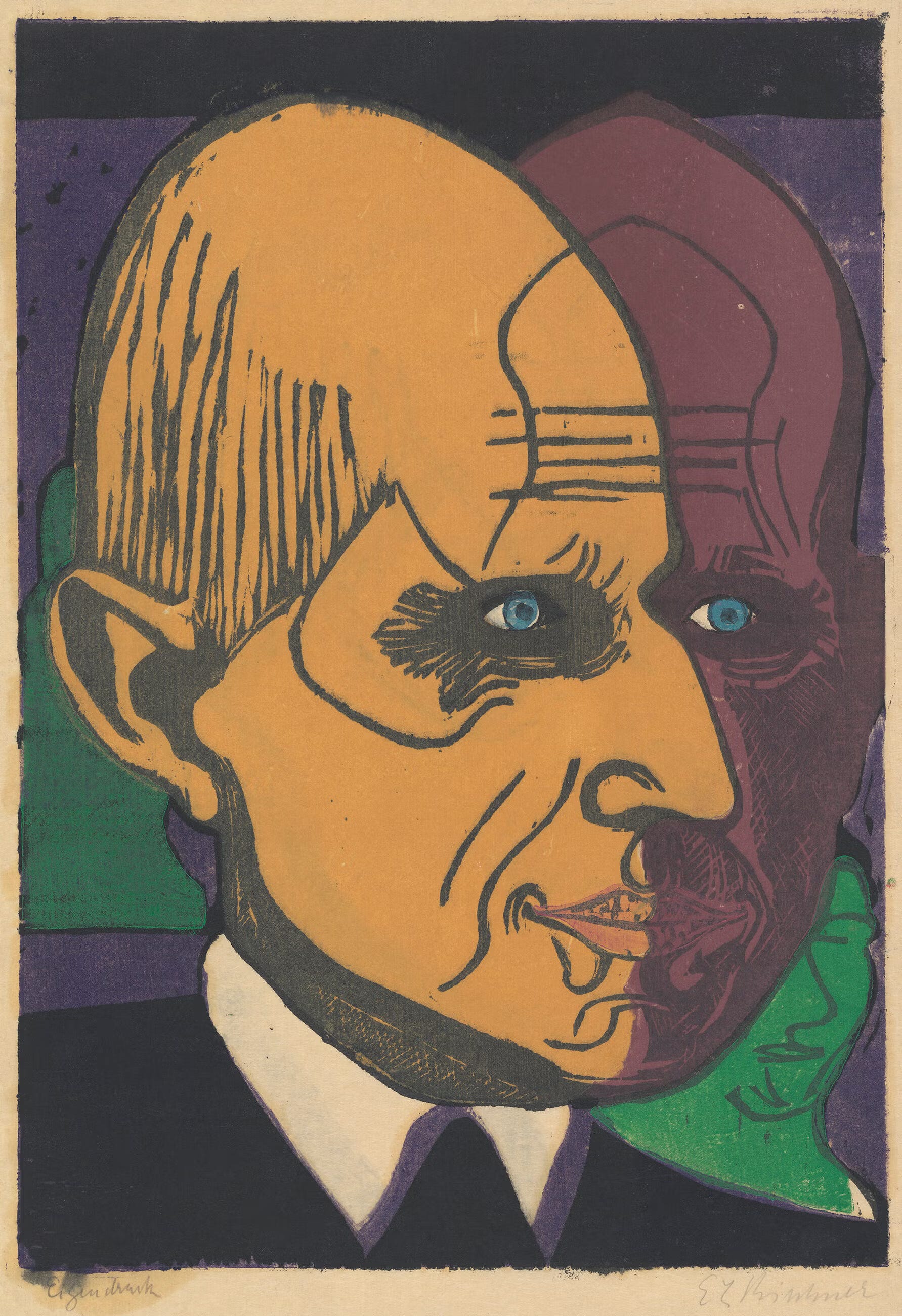
The Chief Justice was engaged in a labored attempt at balancing several competing and irreconcilable covenants—the rule of law, bureaucratic rationality, and an all-consuming read of Article II. Taft’s reasoning has been well covered. Some triangulation of Article II Vesting, Take Care, and Appointments Clauses all command an implied and unregulable presidential removal power and some power to direct administrators. Importantly, almost all of Taft’s opinion was dicta. There are only two limited holdings from Myers, which basically no one cares about: (1) there is a constitutional baseline rule that allows the president to remove some administrators in the absence of a counteracting congressional statute and (2) Congress cannot self-aggrandize itself by inserting itself in the back end in an ongoing removal. That’s it. It ain’t much. One of the most annoying things about how Myers is discussed in courts is lawyers’ and judges’ complete disregard for the line between holdings and dicta in Myers. In the Slaughter oral arguments from earlier in the week, this line gets obliterated. All the dicta are treated as binding precedent (a kind of horrifying prospect if you understand the maximalist reading lurking in the corners of Myers).
When I say Taft chose violence, I mean that he chose to ignore the limited job of answering the questions in Myers so that he could write an opinion laying out his long-held theory of Article II. Taft is an originator of a now frequently heard meme in administrative law: all exercises of Article II authority are exercises of presidential authority. (Taft: “The highest and most important duties which his subordinates perform are those in which they act for him. In such cases they are exercising not their own but his discretion. This field is a very large one.”) That simple meme does a lot of the work in his opinion. At the end of the day, we must just all accept that Taft wasn’t an originalist (a point pressed by Post, Katz, and Rosenblum). The historical portions of his opinion aren’t about original public meaning. For Taft, the president needed the removal power to make sure that his subordinates stayed in line and could work as the embodiments of the president’s largely unbridled political will. (Taft: “Made responsible under the Constitution for the effective enforcement of the law, the President needs as an indispensable aid to meet it the disciplinary influence upon those who act under him of a reserve power of removal.”) This is just Taft’s political morality being injected into the bloodstream of American public law.
That meme understanding of the presidency is now central to the case law associated with the unitary executive. All exercises of administrative authority, the Roberts Court believes, are exercises of presidential authority. In Trump v. United States, the Court reasoned that “the Constitution vests the entirety of the executive power in the President.” In Seila Law, the line was that all subordinate administrators “wield executive power on [the President’s] behalf.” In City of Arlington, Justice Scalia wrote that when administrators wield quasi-judicial and quasi-legislative functions, it’s all still exercises of the executive power delegated by Article II to the president alone. This is a totalizing view of executive power that knows no apparent limits on its face.
The drama for Taft in writing Myers was in containing his read of Article II. I suspect that he knew that his reading of the Constitution was horrifying from a legalistic, rule-of-law perspective. Taft must have realized on some deep (if not entirely conscious) level that his theory of executive power was an inevitable threat to the rule of law as most people think of it. If the entire state is the embodiment of one man’s will, it’s only a matter of time until the American people elect the bad man who will turn the state against the law.
This is where Post’s description of a Taftian “schizophrenia” comes in. The reason I thought Myers was so weird when I read it as a law student is that there are these frenetic jabs throughout the opinion, these asides that come out of nowhere and are in some clear tension with Taft’s reading of Article II. As AV has put it, the limits to Taft’s vision are clearly there in the Myers opinion. But they don’t seem to align with the opinion’s “basic logic[.]” Instead, they read like “arbitrary add-ons,” like “patches on a garment that doesn’t fit the underlying design.”

Let’s start with what I think of as the Perkins paragraph. United States v. Perkins is an important 1886 precedent that—as folks like Post explained—was already serving as the constitutional foundation of the civil service in Taft’s day. In Perkins, the Court held that the Secretary of the Navy could not dismiss a young servicemember at will because a statute required that he first proceed through a court marshal. The logic of Perkins had very little limit on its face. It’s basically just what I’ve described as “administrative depth.” Congress has the power to insulate officials from raw exercises of hierarchical political authority. Although the case was concerned with the Secretary of the Navy’s removal power, nothing seemed to offer a different result for the president.
Perkins hung over Taft like a foreboding cloud during the Myers drafting process. Stone, the devil on his shoulder, wanted him to go all the way. Stone pressed Taft to redraft the Myers opinion to force a direct confrontation with Perkins. He thought that the logic of Taft’s opinion was in clear tension with Perkins. Stone’s prodding only aggravated Taft, who resisted a direct confrontation with Perkins for ill-defined reasons. Post suggests, and I think he’s right, that Taft was forcing an exception to his reading of Article II because he did not want to imperil the civil service.
Taft’s lands on a weird note. He basically says that you can insulate administrators from removal if Congress sets it up so that they are appointed by department heads. After laying out the baseline appointment power and discussing the Decision of 1789, he throws in a line signaling for all to see that he is not going to reconsider Perkins:
In the absence of any specific provision to the contrary, the power of appointment to executive office carries with it, as a necessary incident, the power of removal. . . . That point is, that by the specific constitutional provision for appointment of executive officers with its necessary incident of removal, the power of appointment and removal is clearly provided for by the Constitution, and the legislative power of Congress in respect to both is excluded save by the specific exception as to inferior offices in the clause that follows, viz, “but the Congress may by law vest the appointment of such inferior officers, as they think proper, in the President alone, in the Courts of Law, or in the Heads of Departments.” These words, it has been held by this Court, give to Congress the power to limit and regulate removal of such inferior officers by heads of departments when it exercises its constitutional power to lodge the power of appointment with them. United States v. Perkins, 116 U.S. 483, 485.
Does this make a ton of sense? I mean, not really. Recall that Taft’s reasoning is a triangulation of the Article II Vesting, Take Care, and Appointments Clauses. We need a removal power, we were told, to maintain the president’s control over exercises of his power. So what gives? This thin bit of reasoning and its insertion in a throw-away portion of the Myers opinion reads like a forced guardrail on the unitary executive. Post’s background historical work only makes this reading seem more likely. With Stone nipping at his heels, Taft made a gestural move to insulate the civil service from his own logic.
Internally, it wasn’t just Stone. Justice McReynolds made this oddity a part of his dissent. “I suppose,” McReynolds wrote, that “Congress may enforce its will by empowering the courts or heads of departments to appoint all officers except representatives abroad, certain judges and a few ‘superior’ officers—members of the cabinet. And in this event, the duty to ‘take care that the laws be faithfully executed’ would remain notwithstanding the President’s lack of control.” This was the exact problem Stone had warned of. Taft was providing arbitrary limits on the reach of his reasoning that undercut the whole opinion.
In his own writeup of Myers, Robert Post was blunt:
Taft argued that all executive power was lodged in the president by virtue of the “vesting clause . . . which provides that “The executive Power shall be vested in the President of the United States of America.” He also argued that discretionary authority to remove executive officials was an executive power necessary to ensure that the laws be faithfully executed. It is therefore baffling why Myers nonetheless authorized Congress to regulate the removal power simply by vesting the appointments of inferior executive officers in the heads of departments. (emphasis added)
But this isn’t the only example of what I’m talking about. Then there’s the quasi-judicial paragraph. Recall Taft’s writing on the Comptroller. He was clearly aware that the quasi-judicial and quasi-legislative categories were remaking administrative law and the modern state. Looming over Myers is what I have called the quasi categories’ ideational entailment. The law worked on a hair-line-trigger logic. When administrators were given quasi-judicial or quasi-legislative functions, the law would insulate those administrators from hierarchical political control in the pursuit of judge-like independence.
The logic of the quasi categories was plainly in tension with Taft’s unitarian vision (as we later saw again in Humphrey’s Executor). Everybody knew this at the time. Taft had to exercise an important balancing act. He didn’t really care for independent commissions that wielded the quasi-category functions. He wanted a tribune-like president that could lead the country. The idea that he could get away with just ignoring the quasi categories was problematized by events. While he was writing Myers, the Taft Court received a copy of the Pennsylvania Supreme Court’s decision in a case called Woodruff v. Benn. In Woodruff, the court upheld removal restrictions by determining that the state Public Service Commission was essentially quasi-legislative in character. Taft tried to dismiss this case in a bit of annoyance, but Woodruff was a painful reminder of something Taft was trying to obscure. Over the preceding fifty years, the quasi categories had become the dominant heuristics in American administrative law. And these heuristics required decisionmaker neutrality and some insulation from hierarchical political authority. The Woodruff court treated the label of quasi-legislative as outcome determinative, and it wasn’t alone.
Taft offered up another lame exception to his unitarian vision:
But this is not to say that there are not strong reasons why the President should have a like power to remove his appointees charged with other duties than those above described. The ordinary duties of officers prescribed by statute come under the general administrative control of the President by virtue of the general grant to him of the executive power, and he may properly supervise and guide their construction of the statutes under which they act in order to secure that unitary and uniform execution of the laws which Article II of the Constitution evidently contemplated in vesting general executive power in the President alone. . . . Of course there may be duties so peculiarly and specifically committed to the discretion of a particular officer as to raise a question whether the President may overrule or revise the officer’s interpretation of his statutory duty in a particular instance. Then there may be duties of a quasi-judicial characterimposed on executive officers and members of executive tribunals whose decisions after hearing affect interests of individuals, the discharge of which the President [cannot] in a particular case properly influence or control. But even in such a case he may consider the decision after its rendition as a reason for removing the officer, on the ground that the discretion regularly entrusted to that officer by statute has not been on the whole intelligently or wisely exercised. Otherwise he does not discharge his own constitutional duty of seeing that the laws be faithfully executed. (emphasis added)
Taft here name-checks the then-dominant quasi-judicial function and proceeds to craftily rob it of its meaning. The quasi-judicial function gets you insulation from the president’s direction power, a move that seems to matter for agencies like the Federal Trade Commission. But it doesn’t matter all that much. The President can still remove these judge-like officials at will when he disagrees with how they have exercised their authorities. The metaphor to judge-like independence is eviscerated in the dicta of Myers.
This is an important and somewhat artificial limitation on the maximalist unitary executive. Taft gets to partially continue the legacy of judge-like procedures and processes in administration. But he doesn’t dilute his vision of the president wielding all executive power. Post himself suggests that Taft was not being entirely candid about the effect of his writings. (“Taft’s complaint is not entirely candid, for although he explicitly excluded certain Article II judges from the scope of his Myers opinion, he nevertheless crafted his opinion in an extraordinarily broad way.”) Privately, Taft wrote his friends that the independent commissions were a huge problem, a “hydra-headed” threat to unitarian presidency. Corwin derided the quasi-judicial paragraph with one of the best quips in the history of constitutional discourse: “[Taft created a] paradox that, while the Constitution permitted Congress to vest duties in executive officers in the performance of which they were to exercise their own independent judgement, it at the same time permitted the President to guillotine such officers for exercising the very same discretion which Congress had the right to require.”
Sometimes, legal scholars miss the disingenuousness of Taft’s work. Katz and Rosenblum approach this paragraph with credulity. That’s what’s required to advance a notion that Taft was pursuing a progressive presidency bound by the rule of law. But it’s not just Corwin they’re ignoring. As my work shows, Congress was apoplectic after Myers precisely because senators understood Taft to have been destroying the quasi categories that were central to lawmakers’ construction of the modern state. If the president could still remove quasi-judicial functionaries, the basic logic of the quasi-judicial category was dead. And this is to say nothing of Taft’s conspicuous failure to mention the quasi-legislative category that had already taken on a life of its own by the 1920s.
Describing Myers as the pursuit or vindication of a progressive presidency also just misses the point. Which Myers? Those who see the maximalist unitary executive see something buried in the heart of Myers—a totalizing vision of presidential control over all administration. We can see the other stuff too, Taft’s wild swings to cover up the maximalist underpinnings, but those appear like mismatched material on the foundation of the Myers opinion. To describe the Myers opinion in any clean sense avoids the fact that there is no coherent vision of the presidency in the opinion.
What’s happening then? Myers is a testament to Taft’s deeply fractured psyche. He had a reading of Article II that, I suspect, he understood was on one level incompatible with the rule of law. He truly did want a law-bounded presidency on some level. But he made the fateful choice to have his cake and eat it too. He laid out a totalizing vision of the presidency and then half-heartedly moderated it to save the civil service and the symbolic virtues of court-like administration.
Today, the unitary executive is working free of Taft’s legalistic boundaries. The idea was always more powerful than the pen Taft tried to create for it. Unitarians today dismiss the quasi categories out of hand. The maximalist unitary executive has crowded out the categories’ legibility. That quasi-judicial paragraph must strike contemporary unitarians as an especially odd aside.
The Maximalist Reading Draws Closer
People have always seen the maximalist unitary executive. But often, these folks have been marginalized within the American legal academy. AV’s invocation of the unitary executive drew stern criticism. The maximalist unitary executive was something to be dismissed in polite company. To associate the Supreme Court, Myers, and Chief Justice Taft with such a dangerous vision was in some sense impolite.
This equilibrium is breaking down in real time. While the maximalist unitary executive was merely a phantom lingering at the edges of Myers, today it is taking center stage. At the oral arguments on Monday, Justice Kagan showed that she now sees it. She kept saying that the “rationale” undergirding the unitary executive knows no bounds. She was blunt and she was not alone. The conservative bloc seemed oddly unsteady (Alito aside). They looked like they were searching desperately for more limitations. They are caught again in Taft’s nightmare. They genuinely believe in a reading of Article II that would, if taken to its natural conclusions, stand in perilous tension with their own conception of the rule of law. They want an out and are trying desperately to find one.
The mainstream legal discourse is coming around as well. In a New York Times conversation between Steve Vladeck, Kate Shaw, and Will Baude, Steve was the one who most clearly invoked the totalizing quality of the unitary executive. He interjected:
I don’t understand, and have never understood, how folks like Will can be so equivocal about the necessary implications of endorsing the unitary executive theory. It seems to me that, if the court is going to overrule a 90-year-old precedent on the ground that Congress can never interfere with the president’s ability to fire someone who exercises even a little executive power, waving our hands and saying, “That doesn’t answer the question of how it applies to different facts” is both inconsistent with the logic of the unitary executive theory, and oblivious to how the court has already established its understanding of the theory through rulings on emergency applications.
. . .
But at the risk of being a bit impolite, ambiguity is and ought to be a stake in the heart for the unitary executive theory, entirely because it’s premised on the idea that, to quote the Supreme Court’s majority opinion in Seila Law, “the ‘executive power’ — all of it — is ‘vested in a president.’” If it turns out that the historical answer has been “the executive power — well, at least some of it, anyway — is vested in the president,” then that’s more than just an inconvenience for defenders of this understanding, much like the fact that the original draft of the Judiciary Act of 1789 would have had the attorney general, the chief law enforcement officer in the country, appointed by the Supreme Court. (The final version used the passive voice to describe who would pick the attorney general.) The unitary executive theory makes sense only if it’s absolute.
This is a rather jarring thing to see in the New York Times. I had thought that the maximalist reading, the idea that the unitary executive is an all or nothing proposition, was excluded from the mainstream. That status quo is crumbling. Trump and his ambitions have made the maximalist unitary executive clearer. So has the Roberts Court’s own writings, Trump v. United States in particular.
I’m still getting pushback, but it’s more restrained than I expected. A different sort of scholar still pivots to Taft’s assurances when the maximalist unitary executive is broached in conversation. Emily Bremer thoughtfully displayed this approach yesterday and today. So, for example, Bremer points to, for example, the Perkins paragraph from Myers and holds it up as an example of principled restraint. I don’t think she’s wrong in a sense. (I know better than to say such a thing about Bremer. She’s a Queen in this business.) I just don’t think this view gives credit to Taft’s contemporaries, his interlocutors, or to the lawmakers who all looked at Myers and saw a series of disingenuous exceptions placed on a totalizing vision of presidential control.
Although more people are seeing it, the monster in the painting is not yet visible to everyone. I think they’ll probably start seeing it soon enough. Like Taft, the jurists of the Roberts Court are in over their heads. This is a problem with juristocracy as a mode of governing authority. A juristocrat like Taft can try to control the application of the ideas he generates. But the juristocrat’s ability to meaningfully contain the trajectory of a powerful idea that has generated its own momentum is severely limited. I suspect the Roberts Court will reach for some breaks on the maximal unitary executive. Like the pen constructed a century ago, the limitations they construct will fail under the weight of the unitary executive’s own logic.
Time is a flat circle. We’re all in Taft’s nightmare now.